Photos aren’t just memories. They’re identity.
Published 9/28/26
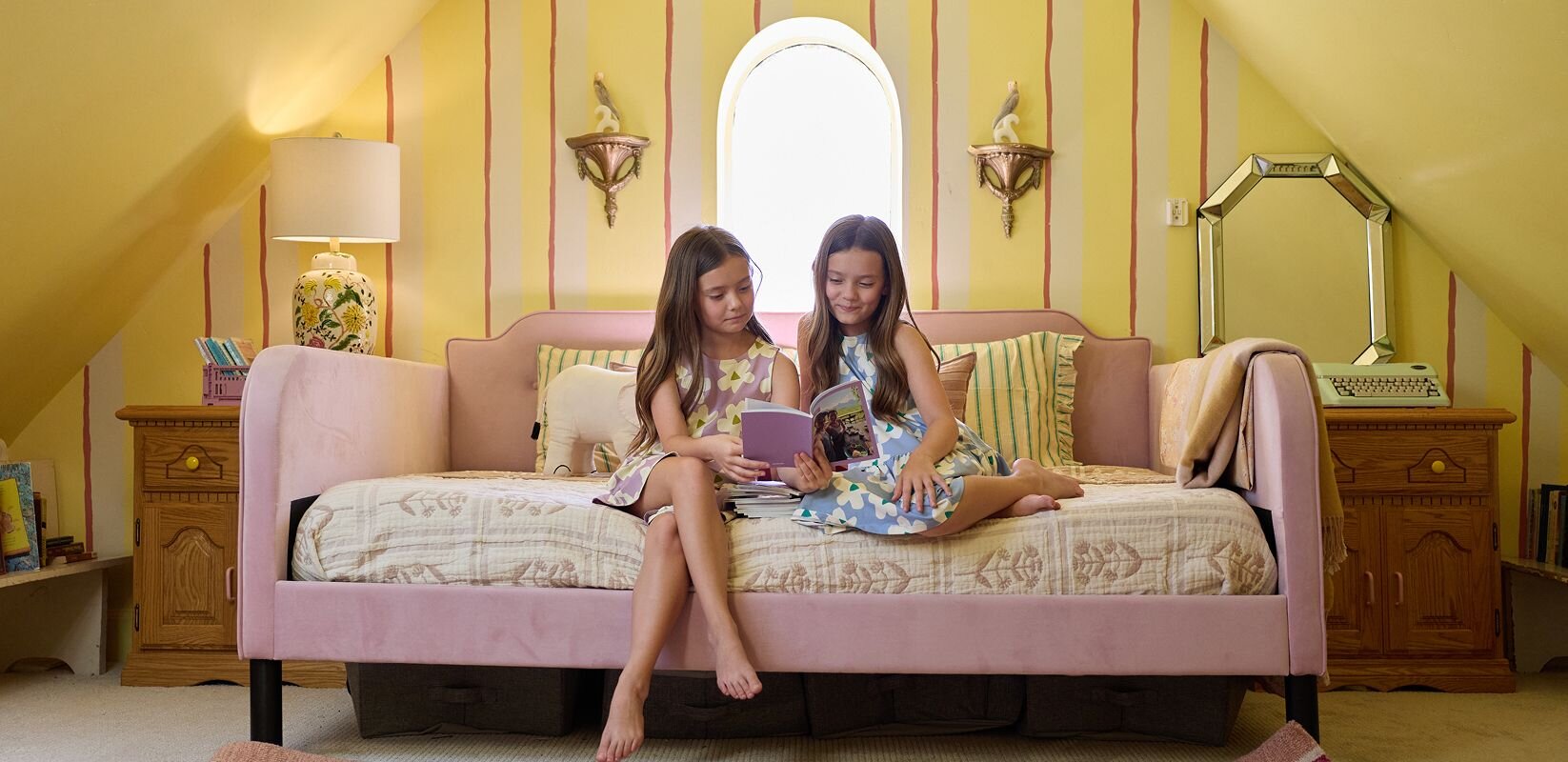
“They constantly remind me of my purpose. That this is my ‘motherhood’ but it is also their childhood and I never want to forget that.”
Ask most people why they take photos and they’ll say something about wanting to remember. But when researchers ask families to go deeper — to describe what photos actually do for them — a different answer emerges. One that has less to do with memory and more to do with who they are.
In the 2025 Chatbooks Family Memory Report, 92% of respondents said they view photos as essential to their sense of self. Not useful for memory. Not nice to have. Essential to identity.
That’s a striking number. It suggests that for the vast majority of families, photos aren’t functioning primarily as documentation — they’re functioning as a mirror. A way of knowing who you are, where you came from, and what your life has meant.
92%
view photos as essential to their sense of self
83%
worry about losing family history as older generations pass
79%
feel anxiety about digital photos disappearing
15,000+
families surveyed across two phases
How photos shape identity: what the data shows
The 2025 study asked more than 15,000 families directly: what role do photos play in your sense of identity? Respondents described five distinct functions.
38%
Memory and remembrance
Photos serve as external memory — helping people recall experiences that shaped them, recover details that would otherwise fade, and preserve a sense of personal continuity across time.
32%
Family connection
Photos provide visual proof of belonging. They answer an unspoken question: where do I fit?
28%
Motherhood and parenting identity
For parents specifically, photos validate the work of raising children — documenting presence, effort, and love in tangible form.
24%
Growth and change
Photos help people understand their own evolution — who they were, who they’re becoming, and how far the distance is between the two.
18%
Legacy and heritage
Photos connect people to ancestors and preserve family history for generations who haven’t arrived yet.
The emotional drivers behind identity
Photos give them a sense of belonging
85%
Photos provide validation as a parent
72%
Photos connect them to their past
68%
Photos support self-recognition
56%
Photos help them create a legacy
42%
The parental identity finding
Twenty-eight percent of respondents described photos as central to their identity as a parent — not just their family’s history, but their own self-concept as a mother or father.
For this group, photos do two things simultaneously: they document their children’s lives, and they confirm their own. Every photo taken is evidence that they showed up. That they were there. That they noticed.
One parent’s response to the question “What do you hope your children feel when they look at photos of themselves?” came in four words:
“That I noticed them.”
That response reveals as much about the parent as it does the child.
What families said in their own words
“I didn’t have any photos growing up for my childhood so it makes me happy to know that my son will have pictures to look back on. Photos are for my kid — he will recognize himself as a newborn and toddler.”
“I consider it my honor to document the family we created. Someday my kids will understand why I always had a camera in their faces.”
If photos are identity, then losing photos isn’t just losing files
This reframe matters practically. If photos are identity, then losing photos isn’t just losing documentation — it’s losing something constitutive of self. This may help explain another finding from the 2025 study: 83% of families say they worry about losing family memories and histories as older generations pass away. And 79% report anxiety about digital photos disappearing due to technology failure.
These aren’t worries about losing files. They’re worries about losing the story of who a family is.
And that story — the one told in photos, passed down in albums, carried in a toddler’s hands to bed at night — is worth protecting not because it’s sentimental, but because it’s structural. Take it away and something load-bearing goes with it.
Data cited from the Chatbooks 2025 Family Memory Report, a two-phase study comprising qualitative interviews and a quantitative survey of more than 15,000 families. Methodology available at https://chatbooks.com/blog/research/family-memory-research-report.
